so i was talking to somebody recently about musicians, and technology, and they noted that there seems to be an unusual overlap between those in the IT space and those in the music space. and well with electrnoic musicians i guess that is even stronger, its even in the name "electronic" musician. making music with computers goes way back and arguably you could create a graph with one point being music quality and another point being advancement of music quality. they would be probably going in opposite directions.
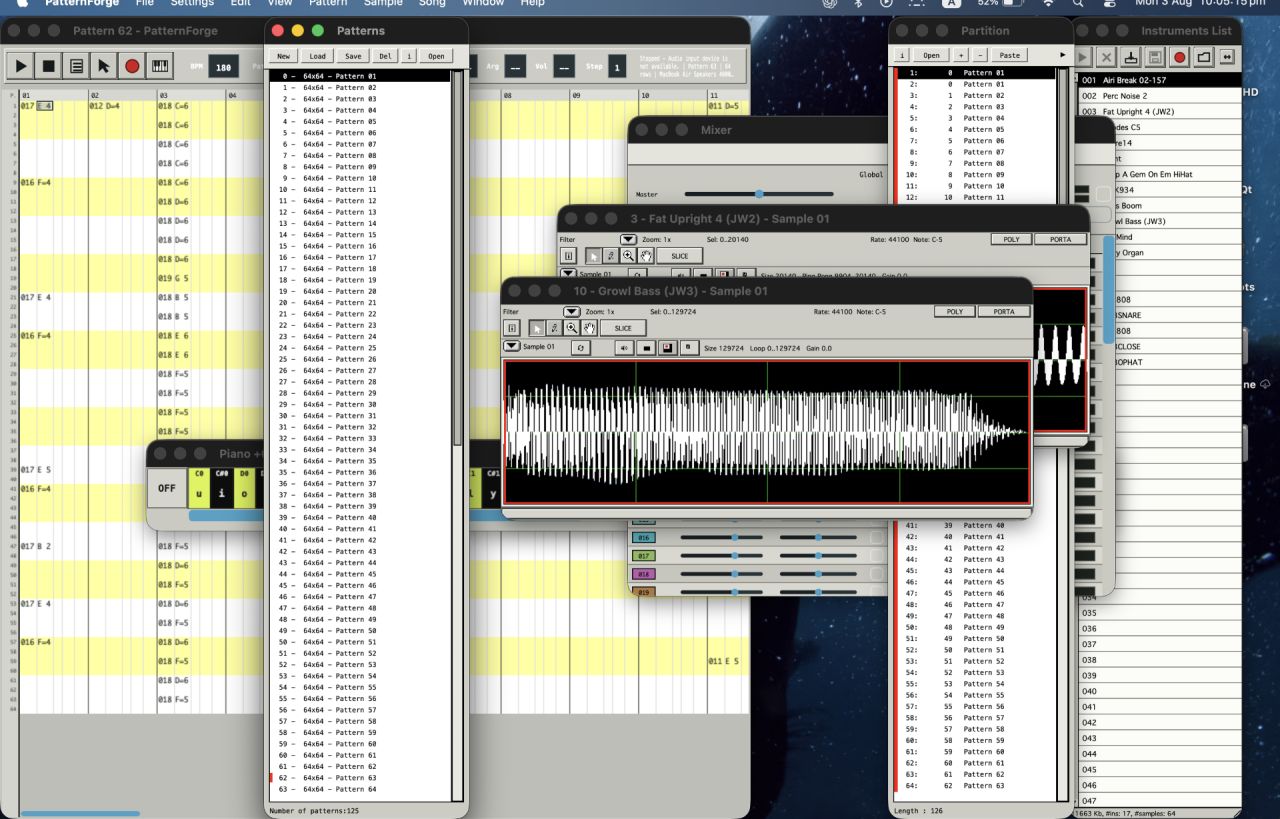
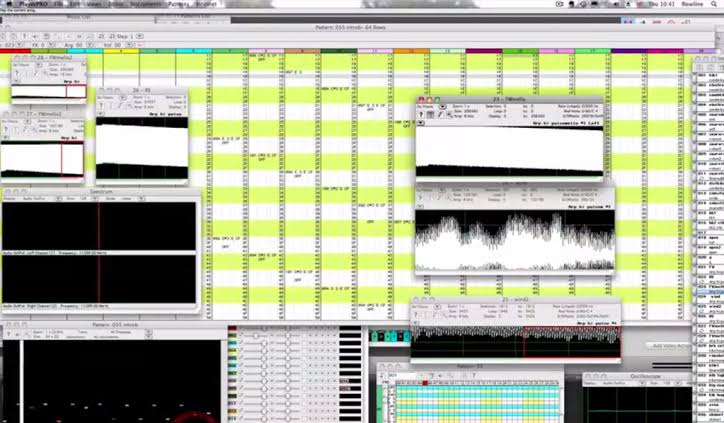
either way my facination with music making tools and methods has no end and i've probably explored more than most when it comes to: ways to make music on the computer. i originally began making tracks on FL studio 12 and moved to ableton, and then started to regress from there. digging into fast tracker, renoise, modular analog simulators, and other bizarre tools to create sounds and arrange them, so the reason im mentioning is this because im not really a rookie when it comes to DAW or creating music on the computers - that being said some music that i've listened to has kind of mystified me in its creation process, particularly music made pre 2005 because the computer was kind of limited compared to what we had beyond that era. a real stand out cornerstone type album for me was Aphex Twin - Drukqs, this album has an a pretty stunning spectrum of sound and arrangement, which has been really inspirational to me from a creative perspective, but also from a techincal one too. to understand thsi a bit better, Richard would have had extremely limited CPU, memory, and even storage space in terms of PC technology, seemingly this album is split between: completely recorded piano pieces and: music made entirely on a computer. there doesnt really seem to be much in between. speaking of his computer itw ould have most likely been a powerPC or some kind of powerbook, perhaps a G4-era mac as well. now everything i have mentioned up until this point is important because now we have hit the moment where richard would be using PlayerPRO, a Mac only music creation tool. which nobody has probably heard of, and the only way i know about it is thorugh a Vimeo video that Richard himself uploaded playing through the project file for the song Vordhosbn, which is one of his best works arguably. we can see the tracker, instrument editor, various types of sequencer windows, sample editing tools and the mixer as well. this video has ALWAYS stuck in my mind because it proves that no matter what tool you have great music can be greated from it, and infact those limitations can sometimes really drive you towards ideas you didnt even know you had inside you. now that being said playerpro does have some features that are unusual to music making tools at thye time and even today, and a workflwo that really supported the type of music richard was making, he kind of talks about this in a few interviews and text posts around the Drukqs era but ultimately i was hooked on the idea that this software = dukqs sonud. obviously thats not true but still the tool you use can have an enormous impact and i wanted to try it out, unfortuantely this software is basically impossible to use today, unless you have a 2005 era mac, time on your hands to build the binary from source code, and fuck around with trying to get external devices to work. i wasnt really ready to run the gaunlet on that and so i let it be. it was kind of always a what if. and the workflows of tracker programs like renoise or openMPT or fast tracker never really connected with me that much compared to ableton or flstudio, although i was able to write intersting music it never eally approached the level wher i thought it was ground breaking or worth the effort. now in 2026 vibe coding is as real as ever and prompting your wayt to a fully functional program orw ebapp is totally realistic. after a few random vibe coded projects i suddenly had the thought, what if, we completely copied player pro. well now that is a good idea, and would really push the boundries of vibe coding, i had pretty low expectations but i built a pretty serious build guide for GPT 5.4 to go away and get it done, i even gave him the original playerpro source code as a reference, and after a lot of tokens eventually we got a first version. the first version really just encompassed the tracker window, and nothing much else, there was a basic sample loading and playing feature, but the UI was no where near the level of 1:1 copy taht i was looking for, and the workflow was even fruther away. so prompting and prompting and hitting 5 hour limits, weekly limits over and over again kind of eventually got it to the level of where it is today, the full feature list is on the github so you can see exactly wht playerforge is capble of, which in some aspects exceeds the original playerpro but also misses the mark in some other areas too, i'm kind of burned out on this project at the moment and fort he type of music i want to make, patternforge absolutely ticks all the boxes. so yeah, playerforge is an omage to a better time, and better music too....